

Author's Note: This was originally written for Easter 2018. Revised in July 2026.
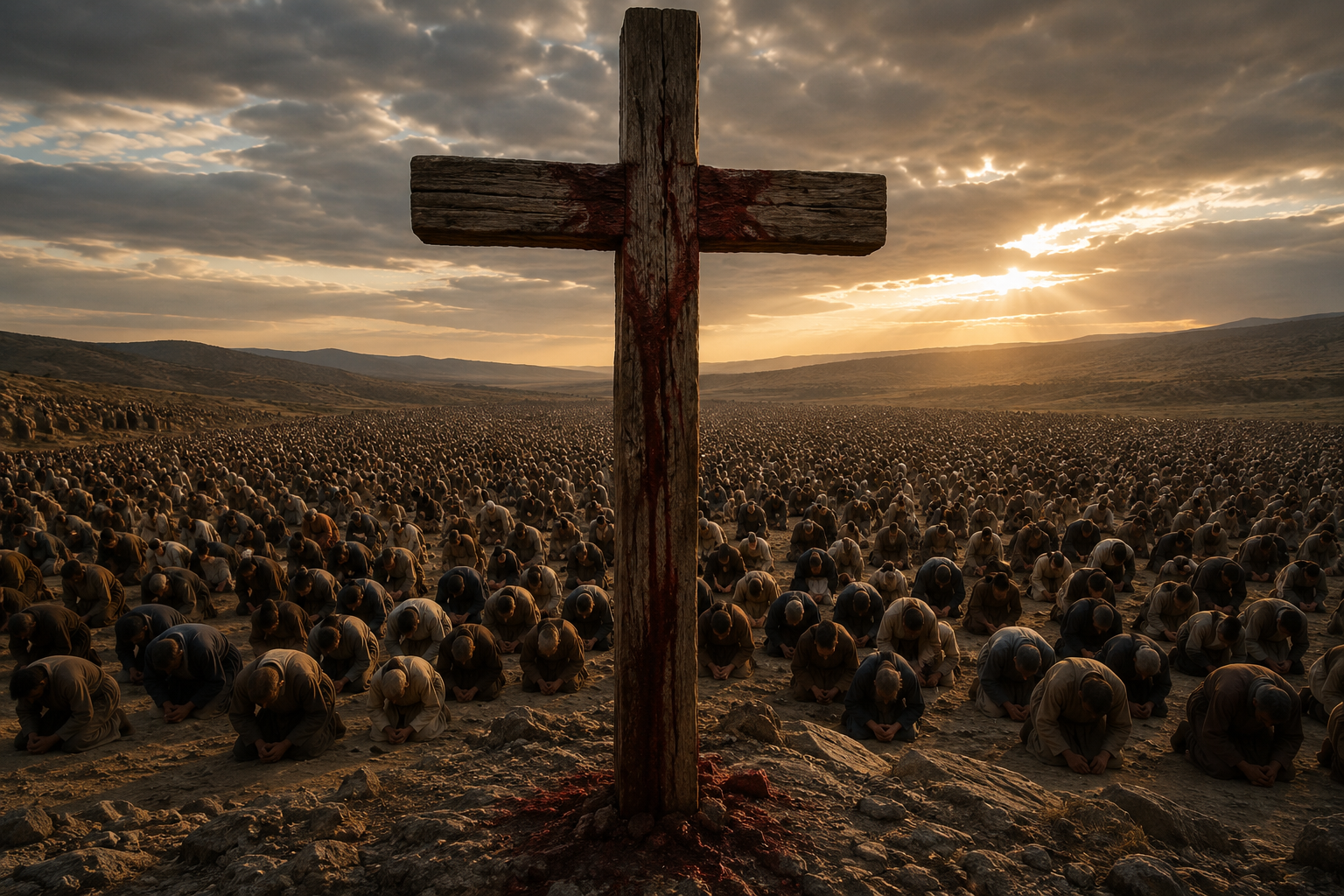
On this Easter Sunday I want to talk about a word in the classic hymn, ‘The Old Rugged Cross’. The first two lines of the first verse are:
'On a hill far away stood an old rugged cross,
the emblem of suffering and shame…'
These two words, ‘suffering’ and ‘shame’, offer a unique insight to the human condition and our capacity to suffer shame. The writer, George Bennard composed the song and wrote the first verse in 1912 after suffering ridicule at a revival meeting. I think Bennard wanted to remind himself, and us, that regardless of how he felt after suffering ridicule that it was nothing when compared to the unimaginable weight of sin, and immeasurable agony, Christ bore for us all.
It is the second word, ‘shame’ that I want us to focus upon today. The reason I chose this word is because I was challenged by someone who said to me that shame has no place in our lives. And that shame should NEVER be used to discipline children. I disagree with that assertion and here is my reasoning.
There a a number of old adages that run along as common sense among my generation. One of them is the question, "Have you no shame?". We observe the often publicized perverseness that permeates American culture, but nobody dare ask that question. Behavior that was recognized as strictly forbidden or perverted is today celebrated in almost all Western cultures.
Instead of the right question, we ask for answers to why there are these staggering increases in pedophilia, murder, rape, and a hundred or more societal issues. The answer is right in front of your face. There is no shame! Where there is no shame there is tolerance for the intolerable. Those who wish to live their lives without shame, openly flaunting their so-called free lifestyle, might want to circle back to this reality; “Good people know about both good and evil: bad people do not know about either.” Mere Christianity - C.S. Lewis ©1952
The second piece of this puzzle about shame is more important than the first premise. Godly shame accompanied by Godly sorrow, meaning being truly sorry for one's sin is so important that it cannot be omitted from the process of becoming a believer. It is a different kind of sorrow than expressed by those who are only sorry they got caught. We are talking real red-faced embarrassment here.
Think back over your life and contemplate the one thing that is the worst thing you have ever done. For some it might be something you should have done, but didn’t. It is most likely something that only you and the LORD God know about. It is the one thing you would not want anyone to ever know!
Now, stop reading right now. Take a few seconds to think about what you did before continuing.
When you think about your worst sin, how does it make you feel? Are you ashamed? Are you sorry; truly sorry? I certainly hope so!
Did you see yourself standing before the throne of the LORD God facing Judge Jesus, with all creation watching, listening and waiting for the outcome of your trial? If your sins are not covered by the precious blood of our Savior you will definitely stand trial at the Judgement Seat of Christ. That cannot be a pretty picture!
Try to picture yourself standing among the crowd of onlookers watching Christ's crucifixion? What do you see? A naked man, beaten almost beyond recognition. A malefactor executed with two others. Or, perhaps for the smallest speck of time are you able to perceive that you are watching Him bear the sins of a hundred billion souls; the judgement of a hundred billion trillion trillion trillion years in Hell as the mere beginning of punishment for those sins, and the overwhelming, unimaginable guilt and shame that is crushing Him and literally breaking His heart? So much guilt and so much shame that God, His Father, looks away as He screams in agony, "Why have You forsaken me?".
Do you see it now? Can you see how shame and sorrow leads us to repentance? And how repentance leads to confession. And how confession leads to forgiveness, and the life altering, destiny changing, becoming born again event that places the penitent into a position of ‘right standing’, or righteousness before the LORD God.
The LORD, our God, through His Son, Jesus Christ, has given humanity the capacity for feeling that which is absolutely necessary before we may obtain righteousness. By comparison, our shame, and the sorrow that accompanies that shame, is merely one drop of water compared to the ocean of shame in which Christ was nearly drowned. I can feel the shame of only one man. He felt the shame of all men.
Shame is the first step that must be taken before you can throw off all guilt and shame. It is leads you towards the redemption that awaits near the foot of The Old Rugged Cross.
THE OLD RUGGED CROSS
George Bennard (1912 Public Domain)
On a hill far away stood an old rugged cross,
The emblem of suff’ring and shame,
And I love that old cross where the Dearest and Best
For a world of lost sinners was slain.
Till my trophies at last I lay down;
I will cling to the old rugged cross,
And exchange it some day for a crown.
Has a wondrous attraction for me;
For the dear Lamb of God left His glory above,
To bear it to dark Calvary.
A wondrous beauty I see;
For ’twas on that old cross Jesus suffered and died,
To pardon and sanctify me.